
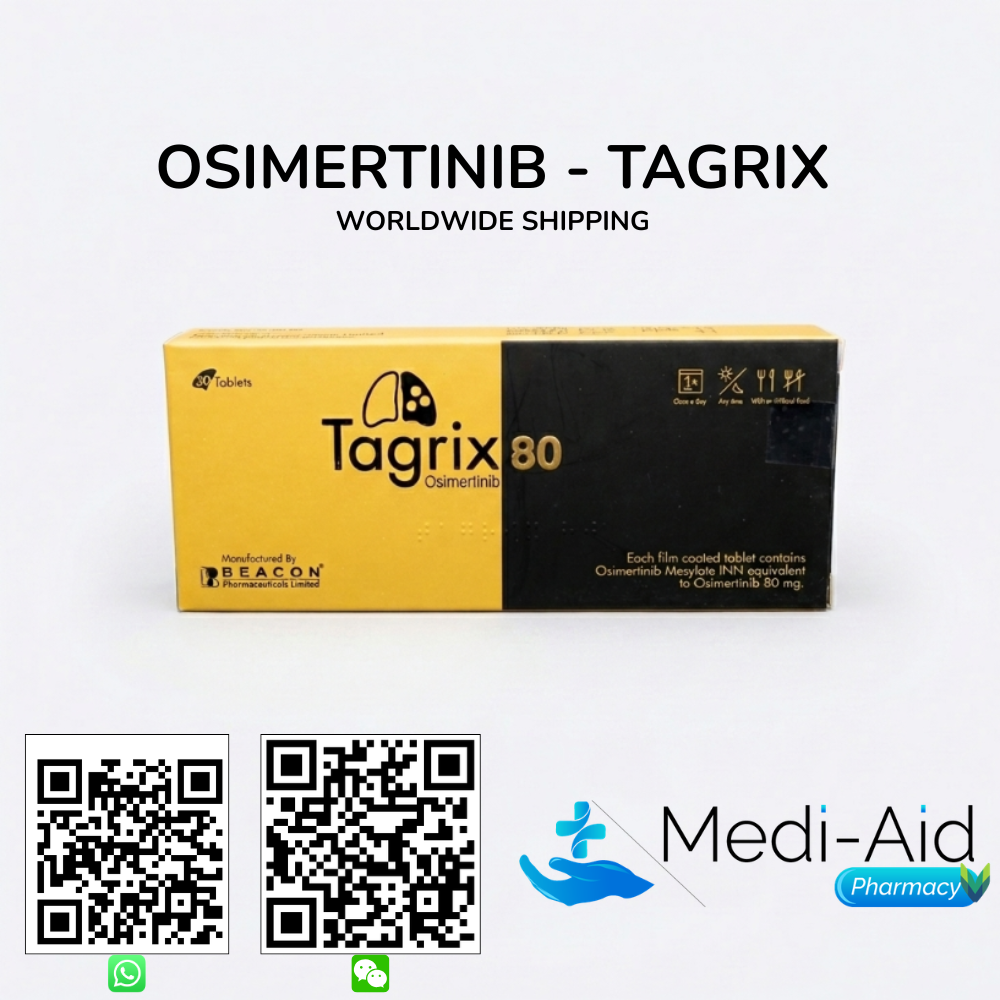
Osimertinib(Tagrix) 40MG & 80MG -(Osimertinib)
Product Name : Osimertinib(Tagrix)
Generic Name : Osimertinib
Formulation : Tablet
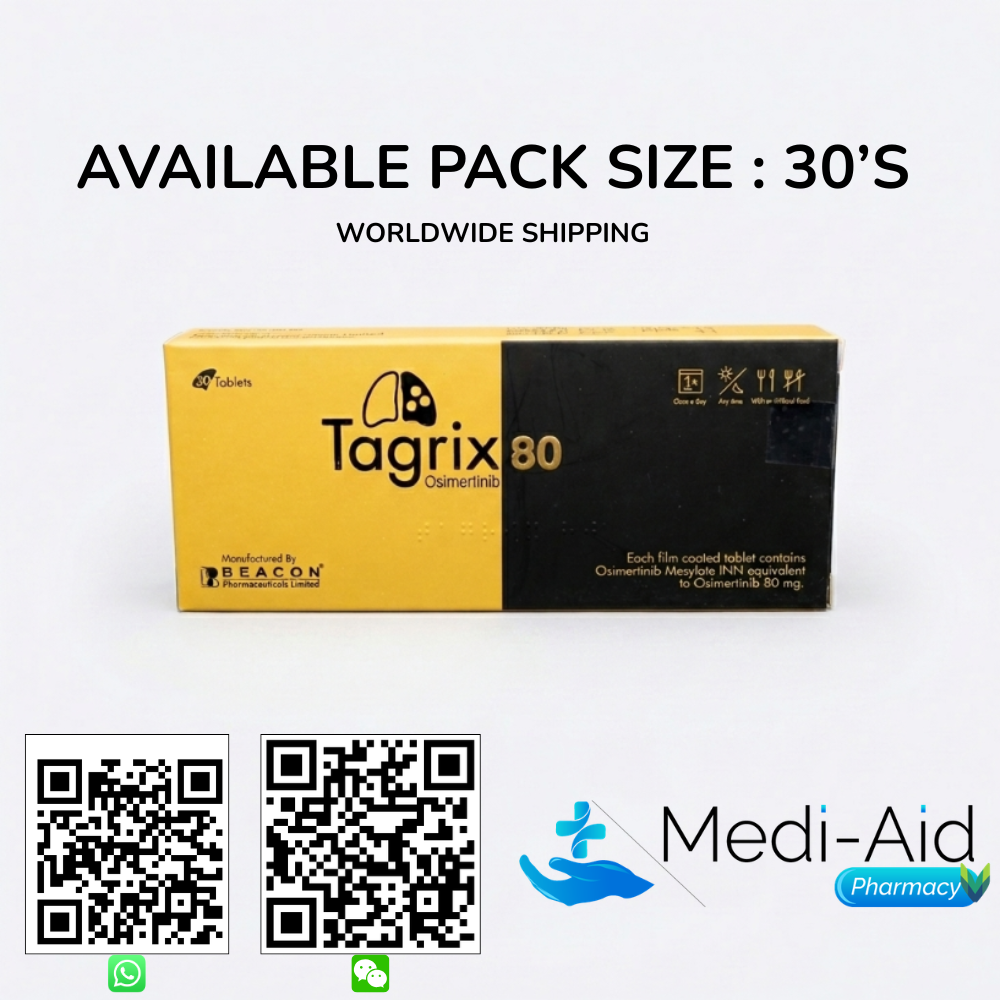
Available Pack Size : 30’s
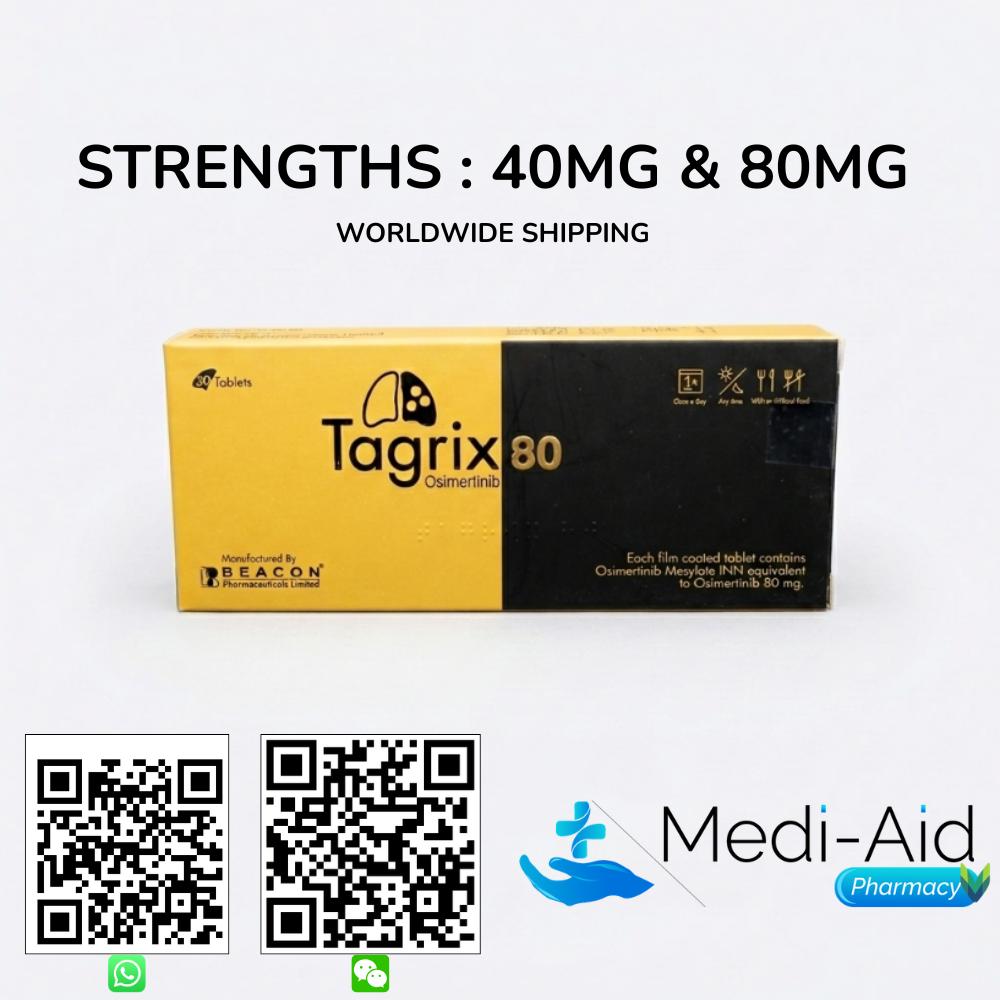
Available Strengths : 40mg & 80mg
Registrations : 01/01/2021

Product Information
Tagrix (Osimertinib) 40mg and 80mg is a third-generation, irreversible EGFR tyrosine kinase inhibitor (EGFR-TKI) used to treat EGFR mutation-positive Non-Small Cell Lung Cancer (NSCLC), including tumours with exon 19 deletions, exon 21 L858R mutations, and the T790M resistance mutation. It works by irreversibly binding to mutant EGFR proteins, blocking the signalling pathway that drives tumour cell growth and survival, while sparing wild-type EGFR to a much greater extent than earlier-generation TKIs. Manufactured by Beacon Pharmaceuticals Ltd., Bangladesh and globally supplied by Mediaid Pharmacy with worldwide shipping.
Basic Product Information of Tagrix (Osimertinib) 40mg and 80mg
| Brand Name | Tagrix (Osimertinib) |
| Generic Name | Osimertinib (as Osimertinib Mesylate) INN |
| Drug Class | Third-Generation, Irreversible EGFR Tyrosine Kinase Inhibitor (EGFR-TKI) |
| Available Strengths | 40mg and 80mg |
| Formulation | Film-Coated Tablet |
| Pack Size | 30 Tablets per Pack |
| Primary Indication | EGFR Mutation-Positive Non-Small Cell Lung Cancer (Exon 19 Deletion, Exon 21 L858R, and T790M Resistance Mutation) |
| Regulatory Approvals | USFDA Approved (First-Line, Adjuvant, Stage III and T790M NSCLC). EMA Approved. DGDA (Bangladesh) Approved as the first global generic of Osimertinib. |
| Originator Brand | Tagrisso by AstraZeneca |
| Manufacturer | Beacon Pharmaceuticals Ltd., Mymensingh, Bangladesh |
| Global Supplier | Mediaid Pharmacy, Worldwide Shipping Available |
| Registration Date | 01/01/2021 |
| Storage Conditions | Store below 30 degrees Celsius. Keep in a dry place away from light and moisture. Keep out of the reach of children. |
How Tagrix (Osimertinib) Works
Tagrix contains Osimertinib, a third-generation, irreversible inhibitor of the epidermal growth factor receptor (EGFR) tyrosine kinase. In certain non-small cell lung cancers, mutations in the EGFR gene, most commonly exon 19 deletions and the exon 21 L858R substitution, cause the receptor to signal continuously, driving uncontrolled tumour cell growth and survival.
Osimertinib binds irreversibly to these mutant EGFR forms, including the T790M resistance mutation that commonly develops after treatment with earlier-generation EGFR-TKIs, at substantially lower concentrations than are needed to affect normal, wild-type EGFR. By selectively shutting down the mutant receptor’s signalling, Tagrix halts tumour proliferation and triggers programmed cell death (apoptosis) in EGFR-mutated cancer cells.
Because of this mutant-selective mechanism, Tagrix is classified as a targeted therapy rather than conventional chemotherapy, allowing it to act on cancer cells more precisely while producing a different, generally more manageable side-effect profile. It is taken as a convenient once-daily oral tablet.
Indications for Tagrix (Osimertinib)
Tagrix (Osimertinib) is indicated for the following conditions:
|
First-Line Metastatic NSCLC For the first-line treatment of adult patients with metastatic NSCLC whose tumours have EGFR exon 19 deletions or exon 21 L858R mutations, as detected by an approved test. |
T790M-Positive NSCLC For adult patients with metastatic EGFR T790M mutation-positive NSCLC whose disease has progressed on or after prior EGFR-TKI therapy. |
|
Adjuvant Therapy As adjuvant therapy after complete tumour resection in adult patients with EGFR exon 19 deletion or exon 21 L858R mutation-positive NSCLC. |
Unresectable Stage III NSCLC For locally advanced, unresectable (Stage III) EGFR-mutated NSCLC that has not progressed during or after platinum-based chemoradiation therapy. |
Benefits of Tagrix (Osimertinib) 40mg and 80mg
|
First Global Generic of Osimertinib Tagrix was introduced by Beacon Pharmaceuticals as the first global generic version of Osimertinib, giving patients earlier access to third-generation EGFR-TKI therapy at a fraction of the originator’s cost. |
Convenient Once-Daily Dosing Tagrix is taken as a single oral tablet once daily, offering a simple, convenient regimen compared to intravenous chemotherapy schedules. |
Effective Against Resistance Mutations Unlike first and second-generation EGFR-TKIs, Tagrix retains activity against the T790M resistance mutation, extending treatment options for patients who have progressed on earlier therapy. |
|
Affordable Alternative to Tagrisso Tagrix contains the same active ingredient as Tagrisso by AstraZeneca, at a significantly lower cost, making long-term targeted lung cancer therapy financially accessible for patients worldwide. |
Multi-Stage NSCLC Coverage Approved across first-line, adjuvant, locally advanced, and metastatic settings, Tagrix supports patients at multiple stages of EGFR-mutated NSCLC treatment. |
WHO-GMP and cGMP Certified Produced by Beacon Pharmaceuticals Ltd. under strict WHO-GMP, cGMP, and ISO-certified manufacturing standards, ensuring every batch of Tagrix meets consistent quality, safety, and efficacy requirements. |
How to Take Tagrix (Osimertinib)
Route: Oral, taken by mouth. Tablets should be swallowed whole and not chewed, crushed, dissolved, or divided.
Standard dose: 80mg once daily, taken at approximately the same time each day, until disease progression or unacceptable toxicity, exactly as directed by the prescribing oncologist.
With food: Can be taken with or without food, at any time of the day.
Missed dose: If a dose is missed by more than 12 hours, skip that dose and take the next dose at its normal scheduled time; do not double up doses.
Dose reduction for toxicity: If a dose reduction is required to manage adverse reactions such as QTc prolongation, rash, diarrhoea, or other toxicity, the dose may be reduced to 40mg once daily. If further reduction is needed, treatment discontinuation should be considered.
Renal impairment: No dose adjustment is required in patients with mild to moderate renal impairment. Tagrix has not been studied in patients with severe renal impairment or end-stage renal disease.
Hepatic impairment: No dose adjustment is required in patients with mild or moderate hepatic impairment. Tagrix is not recommended for patients with severe hepatic impairment due to a lack of safety data.
Strong CYP3A4 inducers: Concomitant use should be avoided where possible. If unavoidable, the dose may be increased to 160mg once daily under close physician supervision, returning to 80mg once daily three weeks after the inducer is stopped.
Paediatric use: The safety and efficacy of Tagrix in children and adolescents have not been established. No data are currently available.
Monitoring and Dosage Adjustments
Regular monitoring is essential during Tagrix treatment. Your healthcare provider will monitor for interstitial lung disease (ILD) and pneumonitis, assessing for new or worsening respiratory symptoms such as shortness of breath, cough, or fever. Monitoring also includes left ventricular ejection fraction (LVEF) at baseline and every 3 months, ECG monitoring for QTc prolongation in patients with risk factors, eye symptoms suggestive of keratitis, and periodic blood counts and liver function tests. Report any breathlessness, chest pain, palpitations, visual changes, or eye irritation to your doctor immediately.
Drug Interactions and Important Information
Avoid concomitant use of Tagrix with strong CYP3A4 inducers such as rifampicin, carbamazepine, phenytoin, and St. John’s Wort, as these significantly reduce Osimertinib plasma exposure and may reduce efficacy. Caution is advised with drugs that are sensitive substrates of BCRP or CYP3A4, as Osimertinib may alter their exposure.
Use caution when combining Tagrix with other medicines known to prolong the QTc interval. Women of childbearing potential must use effective contraception during treatment and for at least 2 months (women) or 4 months (men) after the final dose. Always inform your physician of all medications, supplements, and herbal products you are currently taking before starting Tagrix.
Side Effects and Precautions
|
Common Side Effects Diarrhoea Rash and dry skin Nail toxicity (paronychia) Stomatitis (mouth inflammation) Fatigue Decreased appetite Cough Nausea and constipation |
Serious Warnings and Precautions Interstitial lung disease (ILD) and pneumonitis, which can be fatal. Withhold and permanently discontinue if confirmed. QTc interval prolongation, which may lead to life-threatening arrhythmia. Requires ECG and electrolyte monitoring. Cardiomyopathy with reduced left ventricular ejection fraction. Requires baseline and 3-monthly LVEF assessment. Keratitis and other eye toxicities. Report eye pain, redness, or visual disturbance promptly. Severe skin reactions, including Stevens-Johnson syndrome and toxic epidermal necrolysis. Embryo-foetal toxicity. Not recommended during pregnancy or breastfeeding. Not recommended in patients with severe hepatic impairment. |
Who Should Use Tagrix (Osimertinib)?
Tagrix is suitable for adult patients diagnosed with locally advanced or metastatic Non-Small Cell Lung Cancer whose tumours carry EGFR exon 19 deletions, exon 21 L858R mutations, or the T790M resistance mutation, confirmed by an approved EGFR mutation test on tissue or blood (liquid biopsy). It is also used as adjuvant therapy following complete tumour resection in early-stage EGFR-mutated NSCLC. Tagrix is prescribed by medical oncologists and thoracic oncology specialists experienced in biomarker-guided cancer therapy. A thorough medical assessment including EGFR mutation testing, cardiac evaluation (ECG and LVEF), and liver function is required before initiating treatment.
Manufacturer: Beacon Pharmaceuticals Ltd.
Beacon Pharmaceuticals Ltd. is a leading pharmaceutical manufacturer based in Mymensingh, Bangladesh, and the number one oncology and specialty medicine company in the country. Beacon is the first company in Bangladesh to export cancer drugs and currently exports to Asia, Africa, Europe, and Latin America. Tagrix was introduced by Beacon as the first global generic of Osimertinib, approved by the Directorate General of Drug Administration (DGDA), Bangladesh. Beacon operates under strict WHO-GMP, cGMP, and ISO-certified standards, offering an affordable alternative to Tagrisso by AstraZeneca at a fraction of the cost.
Global Supplier: Mediaid Pharmacy with Worldwide Shipping
Mediaid Pharmacy is a trusted global supplier of specialty and oncology medications. We ensure Tagrix (Osimertinib) is accessible to patients and healthcare providers worldwide through reliable worldwide shipping. Whether you are located in South Asia, the Middle East, Africa, Europe, or beyond, Mediaid Pharmacy provides fast and reliable delivery with full order support. Contact us directly via WhatsApp, phone, or WeChat for pricing, availability, and delivery enquiries.
Why Choose Tagrix (Osimertinib) from Mediaid Pharmacy?
Tagrix represents a major advancement in the targeted treatment of EGFR-mutated lung cancer. As the first global generic equivalent of Tagrisso by AstraZeneca, it delivers the same active ingredient, Osimertinib, with the same proven mutant-selective EGFR-inhibition mechanism at a dramatically more affordable price. Manufactured by the internationally trusted Beacon Pharmaceuticals Ltd. under WHO-GMP and cGMP standards, and distributed globally by Mediaid Pharmacy, Tagrix gives patients worldwide access to high-quality targeted lung cancer therapy without the financial burden of brand-name alternatives. For patients and physicians seeking a proven, affordable, and accessible Osimertinib option with worldwide delivery, Tagrix from Mediaid Pharmacy is the trusted choice.
Frequently Asked Questions About Tagrix (Osimertinib)
What is Tagrix (Osimertinib) used for?
Tagrix (Osimertinib) is a third-generation EGFR-TKI used to treat adult patients with EGFR mutation-positive Non-Small Cell Lung Cancer, including tumours with exon 19 deletions, exon 21 L858R mutations, and the T790M resistance mutation. It is used in first-line, adjuvant, locally advanced, and metastatic settings, blocking the abnormal EGFR signalling that drives tumour growth.
How should I take Tagrix (Osimertinib)?
Tagrix is taken orally once daily, with or without food, at approximately the same time each day. The standard dose is 80mg once daily. A 40mg dose may be used for dose reduction to manage toxicity, at the discretion of the prescribing oncologist. Always follow your physician’s exact instructions.
What strengths is Tagrix (Osimertinib) available in?
Tagrix is available in 40mg and 80mg film-coated tablets, each supplied in a pack of 30 tablets. The 80mg strength is the standard recommended dose for most adult patients, while the 40mg strength is used for dose reduction when clinically appropriate.
Is Tagrix the same as Tagrisso (Osimertinib by AstraZeneca)?
Yes. Tagrix is the first global generic equivalent of Tagrisso. Both contain the same active ingredient, Osimertinib, in the same dosage form and strengths. Tagrix is manufactured by Beacon Pharmaceuticals Ltd. in Bangladesh and delivers the same clinical mechanism as Tagrisso at a significantly lower cost, making it a more accessible option for patients worldwide.
What are the side effects of Tagrix (Osimertinib)?
Common side effects include diarrhoea, rash, dry skin, nail toxicity, mouth inflammation, fatigue, and decreased appetite. Serious but less common risks include interstitial lung disease, QTc prolongation, reduced heart function, and eye toxicity. Always consult your physician for a complete assessment of your individual risks and benefits before starting treatment.
Can Tagrix be used with other medications?
Tagrix should not be combined with strong CYP3A4 inducers such as rifampicin, carbamazepine, or phenytoin, as these reduce its effectiveness. Caution is needed with other medicines that prolong the QTc interval. Always inform your physician of all medications, supplements, and herbal products you are taking before starting Tagrix.
Is Tagrix (Osimertinib) safe during pregnancy or breastfeeding?
No. Tagrix is not recommended during pregnancy or breastfeeding, as it can cause foetal harm. Women of childbearing potential must use effective contraception during treatment and for at least 2 months after the final dose, and men should use contraception for at least 4 months after their final dose. Please consult your physician before starting treatment if you are pregnant, planning to become pregnant, or breastfeeding.
Can I order Tagrix (Osimertinib) online with worldwide shipping?
Yes. Mediaid Pharmacy supplies Tagrix (Osimertinib) 40mg and 80mg globally with worldwide shipping. Contact us via WhatsApp, phone, or WeChat at +8801773428128 or email us at info@mediaidpharmacy.com to enquire about pricing, availability, and delivery to your country.
Order Tagrix (Osimertinib) 40mg and 80mg with Worldwide Shipping
Phone / WhatsApp / WeChat: +8801773428128 | Email: info@mediaidpharmacy.com
Related products
-
Laronib 25MG & 100MG (Larotrectinib)
-
Elopag 50MG (Eltrombopag)
-
Caboxen 20 MG And 80 MG (Cabozantinib)
-
Sunitinib 50 MG (Sunitix)
-
Osimert 80 MG (Osimertinib)
-
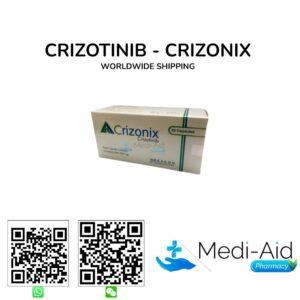
Crizotinib 250MG (Crizonix)
-
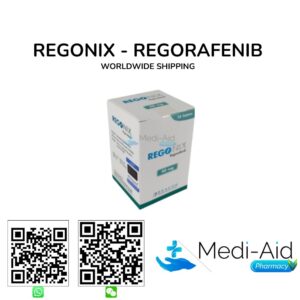
Regonix 40MG ( Regorafenib )
-
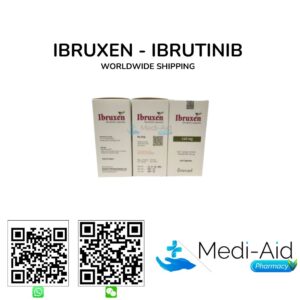
Ibruxen 140 MG (Ibrutinib)
-
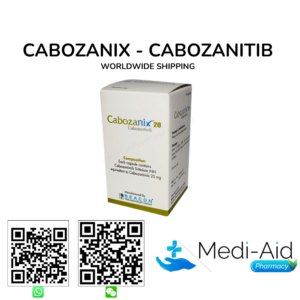
Cabozanix 20MG & 60MG (Cabozanitib)
-
Ibrutix 140 MG (Ibrutinib)